What Should Teams Compare Before Moving an Infrastructure Renewal Date?
New condition evidence can challenge the assumptions behind a planned renewal date. Inspection findings and monitoring trends help teams assess how an asset is holding up. That evidence can support an earlier renewal, a later date, or further investigation before changing the plan.
A renewal can look reasonable on its own and become much harder to justify once the team counts the work it pushes aside. Its timing affects the maintenance required beforehand and other projects competing for the same crews, budget, and outage windows.
The decision therefore extends beyond the asset. Teams need to establish what the evidence supports, which responses remain credible, and what would change across every affected year and project.
What does the condition data establish?
A monitoring trend can flag a change worth investigating. An inspection may help explain its cause or extent. Record what the evidence covers, how reliable it is, and which questions remain open.
Condition data helps test whether the assumption behind the renewal date still holds. Does the evidence suggest the asset is deteriorating faster than the plan allowed for, or holding up better than expected?
Should the team repair or replace the asset, or continue monitoring?
A repair can change the renewal decision if it fixes the problem and supports continued service. Further monitoring has value when it can answer a question that would change the recommendation. Renewal deserves earlier consideration when the current plan no longer fits the asset condition or service need adequately.
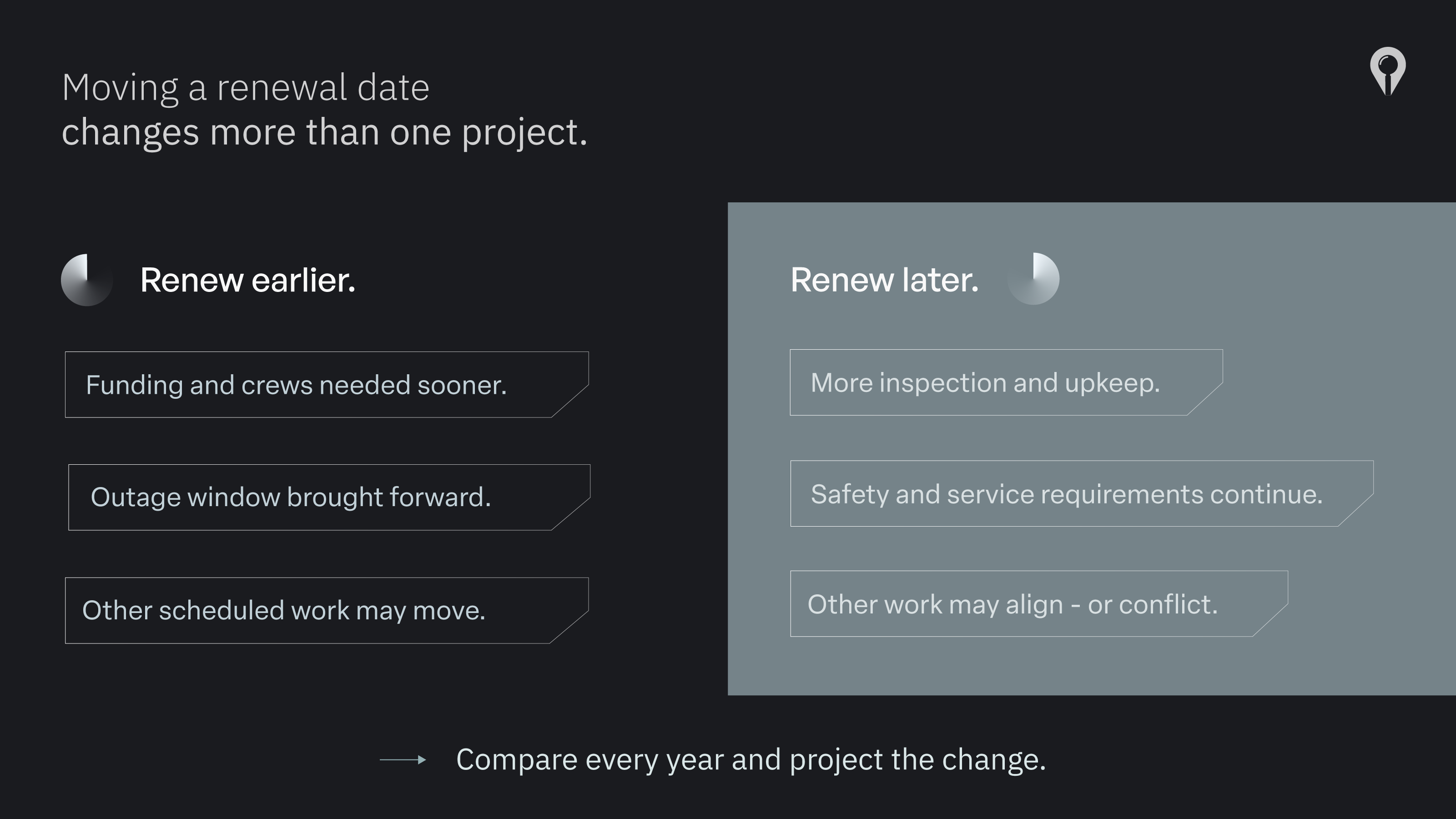
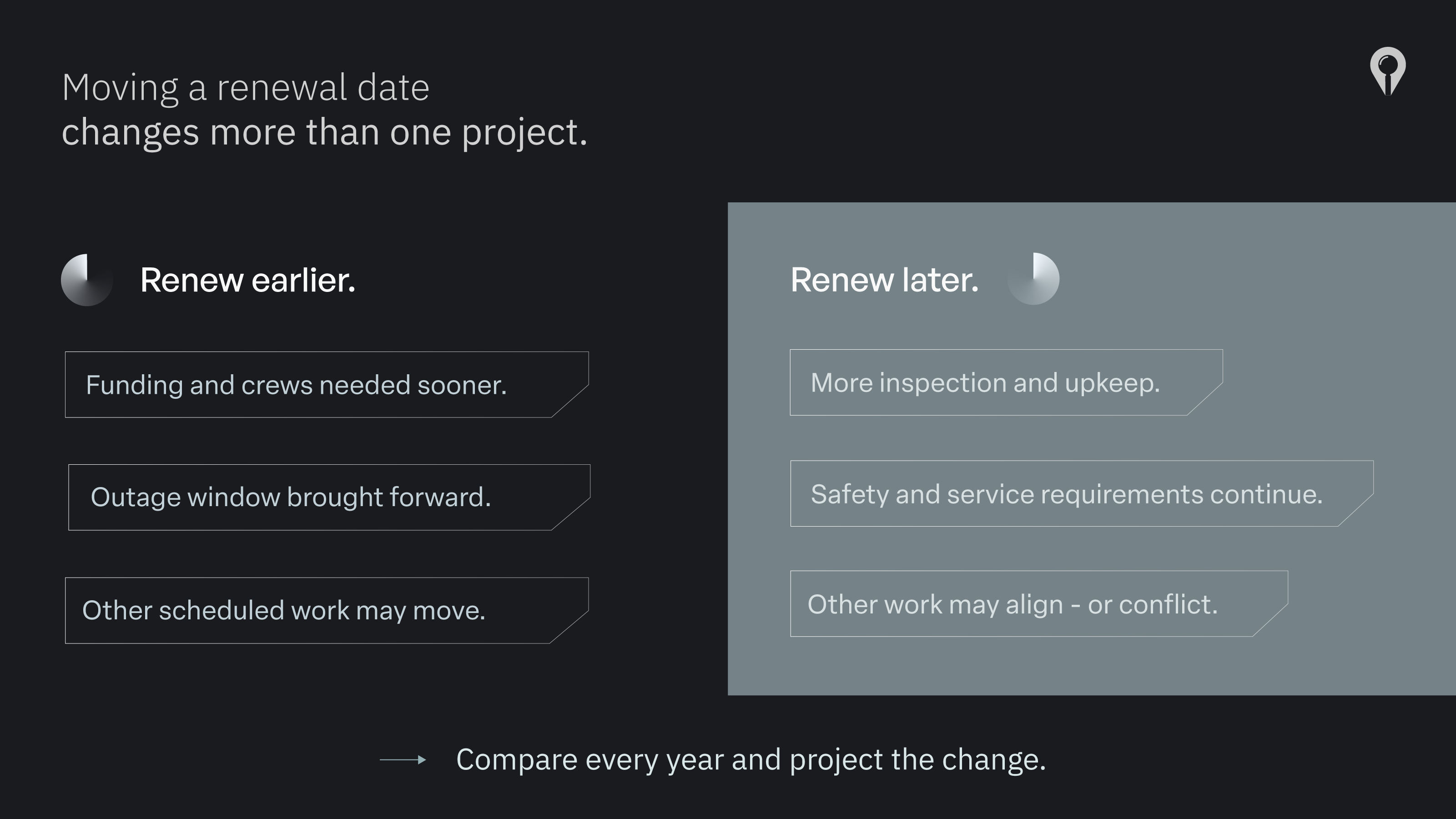
Keeping the current date should be tested the same way. Repeated repairs may change the case for retaining it. Moving renewal later means accounting for inspection and upkeep during the extra years. Safety, service, and regulatory duties still apply.
How could one renewal decision change other planned work?
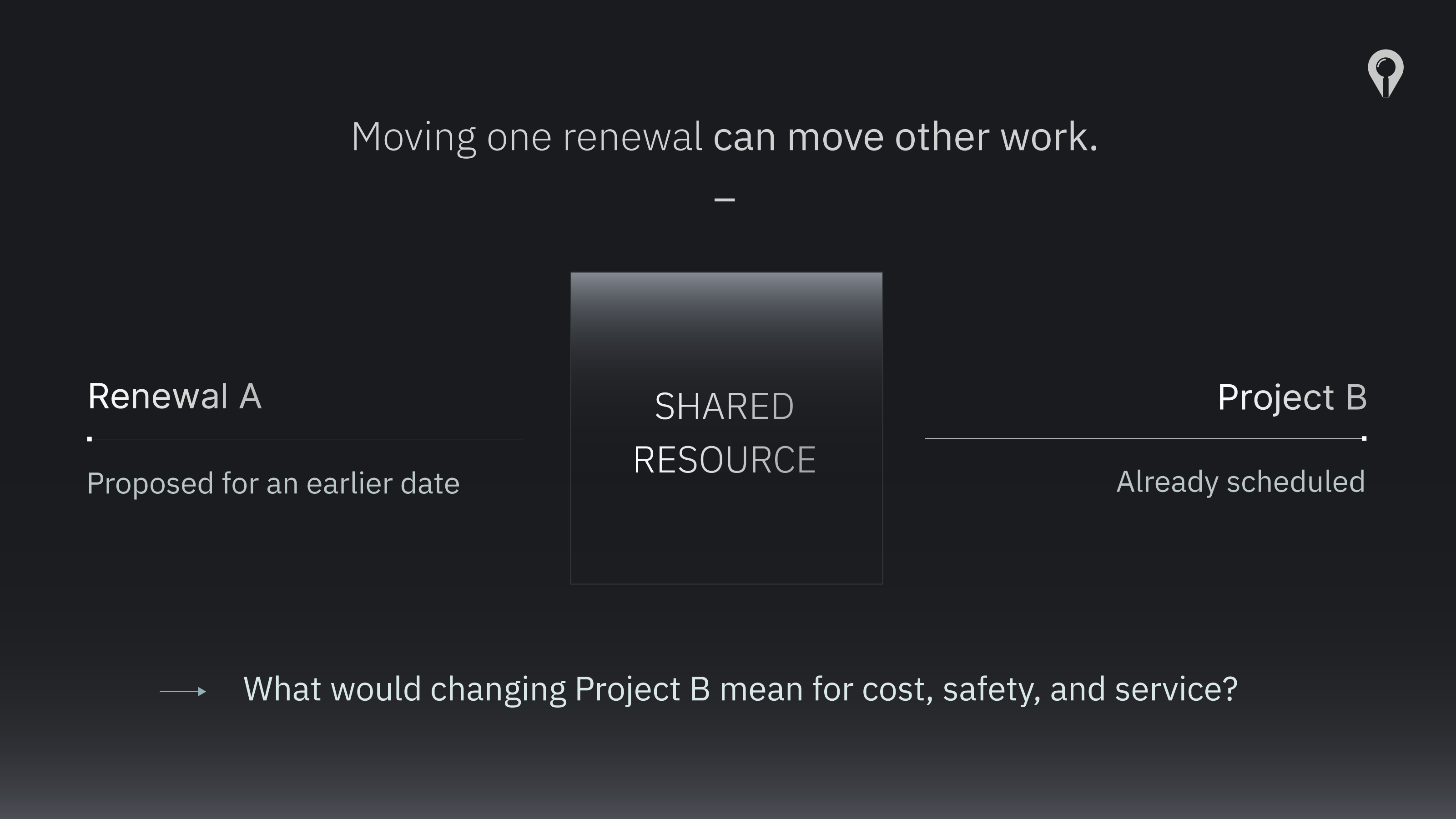
A renewal that solves one problem can create a scheduling problem elsewhere. Bringing one forward may require crews or an outage window already assigned to another project. The proposal should identify those commitments and explain the consequences of changing them.
A later renewal could line up with growth or compliance work planned in the same area. There may be reasons to deliver them together, provided the asset can remain in service until then and the schedules actually align.
The team can then judge whether the change still makes sense across the program.
What should the comparison cover?
Compare every year and project the proposed change would affect. Record:
- what the condition evidence establishes;
- which response options remain credible;
- when renewal and maintenance spending would occur;
- which crews, outage windows and other resources are required;
- which other projects would move or change;
- the safety, service and regulatory implications;
- the assumptions and uncertainties that could change the recommendation.
Use the investment methods already applied by the business for credible cost estimates. Keep safety, service and regulatory effects visible rather than forcing them into a monetary value where no defensible valuation exists.
When must the decision be made?
Procurement lead time helps set the deadline for deciding. Cost, safety, service, and the consequences for other work help establish the priority.
Work back from when the asset must be in service, allowing time for procurement and installation. If important condition evidence will arrive after the order needs to be placed, identify what can be established sooner and how the remaining uncertainty affects the choice.
What if the evidence still leaves the decision open?
The most useful next evidence is one capable of changing the recommendation. Another inspection might establish whether a repair is practical. Monitoring over a relevant operating period could clarify whether the condition trend persists. Updated schedules might show whether coordinating two projects is feasible.
Choose the next evidence according to the decision it could change and the time available. Record the remaining uncertainty and when the recommendation should be reviewed.
The funding discussion can then examine a specific proposal with its consequences visible. The team can see which work would move, what keeping the asset in service would require, and which evidence still stands between the current plan and a different one.
Add a compact framework before the conclusion
Insert:
Before changing a renewal date, ask:
- What has the evidence established?
- Which responses remain credible?
- What changes across the affected years?
- Which other commitments would move?
- What uncertainty remains?
- When must the decision be made?
If new condition evidence is challenging a planned renewal date, discuss the question, available records and decision deadline with KartaSoft.