
How to Evaluate Physics-Informed AI Alongside Existing Monitoring
The most revealing moment in an evaluation comes when the analysis and the existing monitoring disagree. The gap may point to something the monitoring missed, or to a flaw in the analysis, and engineers need a way to establish which explanation the evidence supports.
That is why existing monitoring provides a reference point for evaluating physics-informed artificial intelligence (PIAI). The value of additional analysis depends on what it contributes to current engineering practice and whether engineers can review its output.
What would an evaluation establish?
An evaluation should answer two questions. Does the analysis add useful information to a specific operational question? Does it give engineers enough evidence to judge that contribution?
The intended use matters. Information used to support further investigation may require a different level of evidence from information considered in maintenance or capital planning decisions.
What does your existing monitoring already provide?
Infrastructure teams already draw on measurements, historical trends, inspection findings, engineering models, and operational experience.
These sources help engineers understand asset behavior and form expectations about operating conditions. The depth of that understanding varies across assets and organizations.
What could physical relationships add to existing measurements?
Physics-informed AI builds physical relationships into the analysis, so observations can be examined against how an asset is expected to behave.
Suppose an analysis suggests that an observed change in asset condition differs from the behavior expected by the engineering team. Engineers now have a specific question to investigate using their knowledge of the asset and the available evidence.
Whether the analysis adds anything depends on the evidence behind that suggestion.
What can an engineer check about the output?
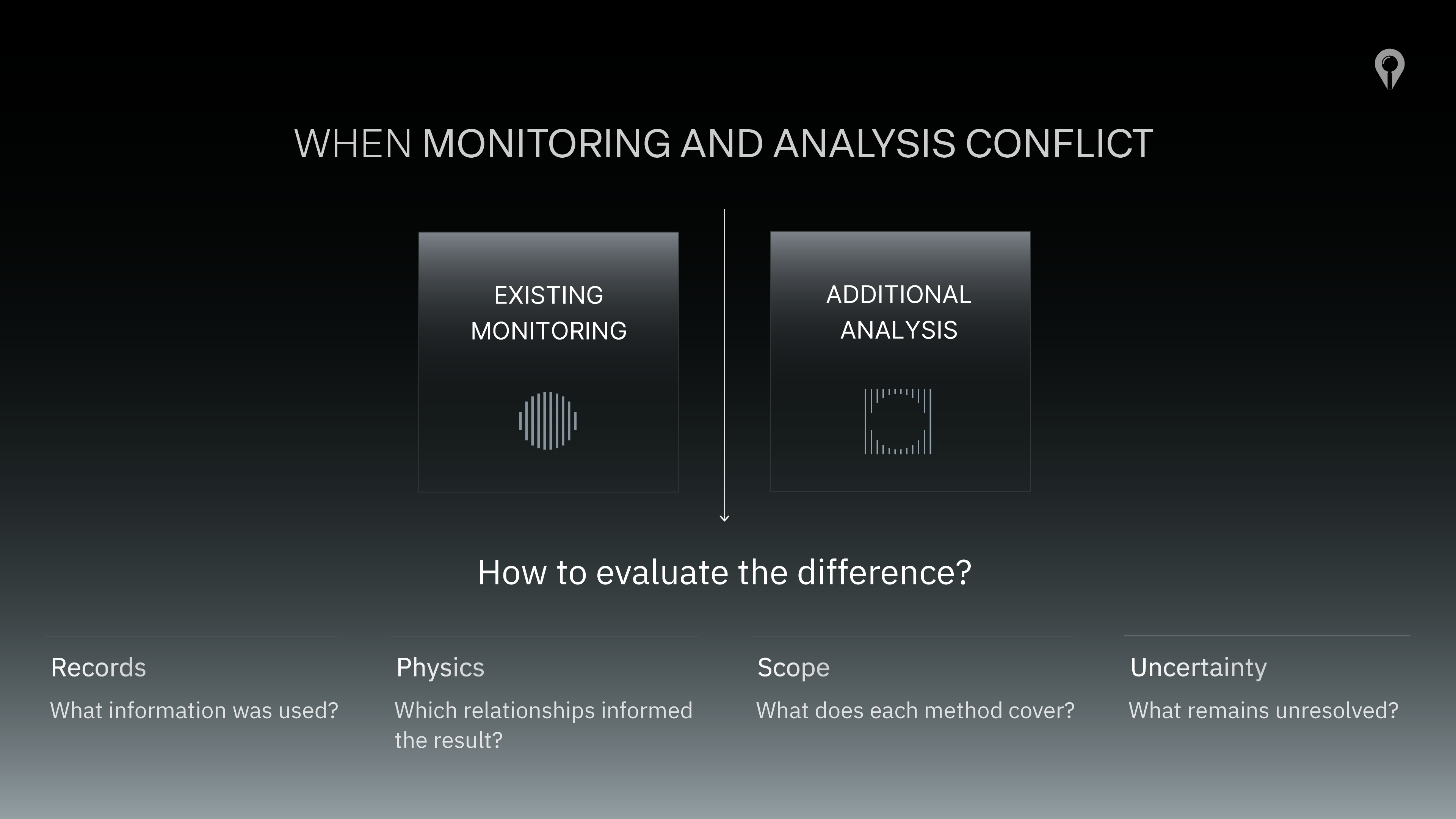
Review matters particularly where the output differs from existing monitoring. The difference may show that the analysis caught something the monitoring missed. It may also show an error in the analysis. Reviewability helps engineers establish which explanation the evidence supports.
Agreement has value too. It can raise confidence in an interpretation, although agreement alone cannot establish whether the analysis adds anything new.
Four questions help engineers examine an output.
Which records informed the analysis?
Gaps or errors in the inputs can shape the result. Engineers need to know which records were used, what they cover, and what is missing.
What physical relationships did it use?
A relationship that holds for one asset may need different assumptions for another or under different conditions. The assumptions have to be visible enough to judge.
What does each method cover?
Monitoring and the analysis may represent different aspects of asset behavior. Some disagreements arise because the methods cover different things.
What remains uncertain?
An output can support one reading and leave others open. A review keeps what the evidence shows apart from what the analysis assumes.
A difference that stays unexplained shows where more evidence is needed. It also limits how much weight the additional information can carry.
How would the analysis fit existing engineering practice?
The analysis has to fit the responsibilities and review processes the organization already has.
When evaluating physics-informed AI, consider:
- What information would it contribute?
- How could engineers review its basis and limitations?
- Under which conditions has the method been evaluated?
- What evidence would support its intended use?
- Who would review the information within existing engineering practices?
Engineering judgment stays central. The analysis can be one part of the evidence considered by the people who decide on operations and assets.
KartaSoft expects its own analysis to be reviewed against the same questions.
If your team is considering physics-informed AI alongside existing monitoring, discuss your operational question, current practices, and evaluation requirements with KartaSoft.